


The recognition of Somaliland by Israel represents a pivotal moment in the evolution of the “right to self-determination”. For decades, this principle was largely secondary to the preservation of existing national borders.
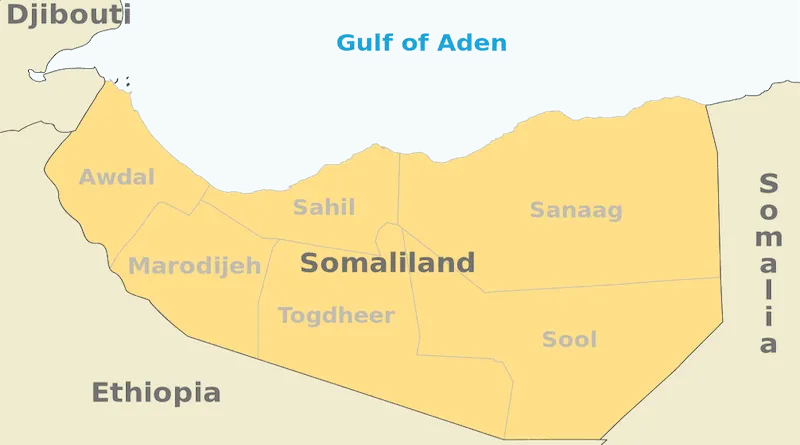
This new development suggests a return to a more pragmatic, “remedial” interpretation of self-determination.
And here’s why:
Since the 1960s, the international community (particularly the African Union) has adhered to the doctrine of uti possidetis — the idea that colonial-era borders must remain unchanged to prevent continental chaos. The Israeli recognition effectively challenges this “post-colonial consensus” by prioritizing Functional Statehood over Territorial Integrity.
The Rise of “Transactional Self-Determination”, with this return of self-determination more transactional than history remembers self-determination. Strategically positioned along essential global shipping lanes, Somaliland’s strategic importance renders it in a prime position to leverage, and give what they have to get what they want.
To understand the significance of Somaliland’s recognition in 2025, it is essential to look at how Western powers first fought to “set” the principle of self-determination. In the 1800s, self-determination (then called “popular sovereignty”) was the principle in which many countries today were created out of the Ottoman Empire, a rival to the West.
As the world watches the historic recognition of Somaliland by Israel, the region has officially become a centrepiece of a new game.
The reports of South Sudan considering recognition are historically poetic. As the only African nation to successfully exercise the right to secede in the 21st century (back in 2011), its support would break the African Union’s “taboo” on border reorganization, and potentially cause a domino effect:
If more African nations (one a former secessionist state itself) recognize Somaliland, it undermines the AU’s authority to dictate the “indivisibility” of borders. This could revitalize self-determination movements in regions like the Tigray (Ethiopia) or Ambazonia (Cameroon).
Hence, The AU has promptly rejected any recognition of the sovereignty of Somaliland.
What’s at play here?
It appears the geopolitical landscape of the Horn of Africa is being redrawn. Somaliland is breaking away from the Federal Republic of Somalia, a country ridden with instability. But with Somaliland’s decades track record of better stability and its command over the Bab el-Mandeb (one of the world’s most vital maritime chokepoints ), Somaliland is thought by many to be a valuable ally for Israel and others.
From issues with Somalis from Somalia, which Somaliland is breaking away from. The Trump Administration has said he doesn’t want Somalis in America, showing a clear dislike for Somalia; to reports that Somaliland is considering working with Israel on the resettling of displaced Gazans.
Beyond its deep-water port, Somaliland’s coast is a hub critical mineral deposits essential for 21st-century tech. Control of this corridor also offers a direct counter to the Houthi-controlled waters and Iranian influence in the Red Sea.
For the people of Somaliland, the 2024 Ethiopia-Somaliland MoU and the 2025 Israeli recognition prove one thing: Recognition is the only currency that matters.
This historic shift marks a major turning point for the “right of self-determination” for Somaliland and perhaps for Geopolitics across the Globe.