

Exploring the Impacts of Constitutional Alteration on South-West, Nigeria
Legislative changes would facilitate a more prosperous, self-reliant path for South-West States by reducing dependence on the Federal Government and fostering Regional Development.

An Assessment of the South-West Geopolitical Zone: Status Quo and Future Projections
The South-West Geopolitical Zone/Region is one of the Six (6) Geopolitical Zones in Nigeria, it comprises Six(6) States, which are: Lagos, Ondo, Ogun, Òyó, Ọṣun and Èkìtì States.
The Landmass is ~78,000 Square Kilometers, bordered to the Sea by Coastline length of about 300Km from Lagos-Ogun waterside-Ondo/Ilaje.
The South-West directly borders the following Kwara, Kogi, Edo and Delta States ( via a small landmass corridor in Ondo Coast to Koko/Itsekiri/Warri).
The South-West Geopolitical Zone accounts for about 46% of The Total GDP of Nigeria, and 80% of Manufacturing or industrial capacity of Nigeria via the Lagos-Ogun Industrial clusters, it also contributes close to 65% of Non-Oil Revenue to the Federation Account in form of various taxes collected by NRS.
The aforementioned and many more not mentioned could be the status quo and may be the past for the region, because they are about to be surpassed by geometrical or astronomical level.
The Yorùbá Nation - the Emerging Hegemon of West Africa Coast

Summary: This report analyzes the historical, cultural, and economic foundations that position the Yorùbá-speaking region—spanning Southwest and Central Nigeria, Benin Republic, and Togo—as the natural successor to regional leadership in West Africa. By examining “Lingual Soft Power,” the “Greater Lagos” industrial cluster, and the coined concept of “
I’m not writing this to suggest that any magic wand has arrived in the scene or that the US has approved any “Marshall Aid Plan” nor “European Recovery Program” that happened after the WWII for the South-West Geopolitical Region, the Renaissance or Golden Age Era being speculated here is Local and Internally.
It’s as a result of:
1. Constitutional Amendments, Reviews and Reforms
2. Structural/Institutional and Bureaucratic Changes
Following the collapse of the First Republic during the January 15, 1966, military coup, Nigeria endured nearly three decades of centralized military governance. This prolonged period of consolidation exerted immense pressure on the nation’s socio-economic fabric, effectively stifling innovation and competition. The resulting rise in bureaucratic density fostered systemic corruption and complacency, while simultaneously hindering intellectual diversity, experimentation, and the broader ease of doing business.
In recent years, however, the trajectory of Nigerian governance has shifted toward essential reform. Constitutional reviews, initiated under the late President Muhammadu Buhari, marked a pivotal departure from total centralization. By amending the 1999 Constitution to move sectors like railway and power from the Exclusive List to the Concurrent List, the Government granted States and Private Investors the constitutional authority to participate directly in these critical infrastructure areas. This movement toward the decentralization of power, which began with those foundational reforms, is now being further accelerated and elevated by the Present administration.
Here are the Specific Bills for Constitutional Alteration:
Based on the specific legislative proposals outlined in the document provided, the implementation of these bills would have profound and multifaceted impacts on the States within the South-West Geopolitical Zone zone of Nigeria (Lagos, Ogun, Òyó, Ọṣun, Ondo, and Èkìtì).
The South-West is characterized by a high level of commercial activity (particularly in Lagos), significant industrial bases, a large urban population, and a distinct socio-political history that often favors regional cooperation and sub-national autonomy.
Here is an extensive analysis of the suggested impacts of these specific bills on the South-West States, categorized by the thematic areas in the table.
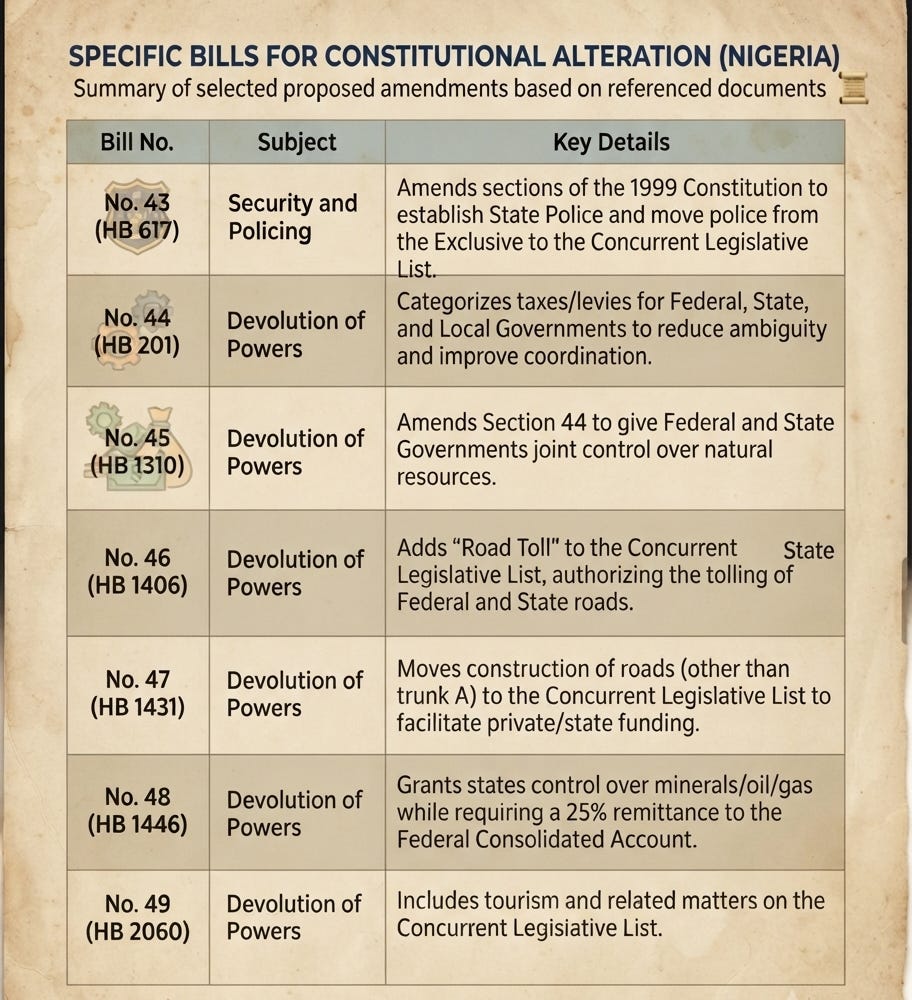
1. Security and Policing (Bill No. 43)
Proposal: Amends the Constitution to establish State Police, moving policing from the Exclusive to the Concurrent Legislative List.
Reclaiming Safety: Why State Policing is the Critical Next Step for Nigeria

Preface: This analysis provides an incisive and comprehensive examination of the historical, structural, and operational complexities surrounding the proposed transition toward state-level policing in Nigeria. By tracing the lineage of regional security demands from pre-independence Native Authority systems to the contemporary necessity of decentralized…
Impact on South-West States: This is arguably the most significant proposed change for the region. For years, South-West governors, under the aegis of the Development Agenda for Western Nigeria (DAWN) Commission and the South-West Governors’ Forum, have passionately advocated for state police. This demand culminated in the creation of the regional security network, Amotekun, which operates within legal limitations.
Enhanced Regional Security Architecture: The passage of this bill would fully legitimize and strengthen Amotekun. States would have the legal power to recruit, arm, and manage their own police forces, tailored to local intelligence and terrain.
Improved Response Times and Effectiveness: Local police, familiar with the language, culture, and geography of South-West cities (like Ibadan, Lagos, and Akure) and rural areas, would likely be more effective in combating kidnapping, banditry, and herder-farmer conflicts that have plagued the region in recent years.
Fiscal Implications: While beneficial, this places a significant financial burden on South-West states. They would need to fund salaries, equipment, training, and logistics for a state police force, potentially straining state budgets. Lagos state is best positioned to absorb this cost, while other states may struggle.
Political Control and Accountability: There is a potential risk of state governors utilizing a state police force as a tool against political opponents. Robust legislative and judicial oversight mechanisms would be essential within each state to prevent abuse of power.
2. Devolution of Powers: Infrastructure and Tourism (Bills Nos. 46, 47, & 49)
Proposal: Allows for the creation of “Road Tolls” by states (46), moves the construction of non-Trunk A roads to the Concurrent List (47), and includes Tourism on the Concurrent List (49).
Impact on South-West States: These bills align perfectly with the economic integration goals of the South-West. The region has a dense network of state roads and significant tourism potential.
Economic Viability of Infrastructure: The ability to institute road tolls (Bill 46) is crucial for the South-West. Major interstate roads, such as the Lagos-Ibadan Expressway (though a federal road, state spurs connect to it), the Sagamu-Benin Expressway (passing through Ogun), and intra-state highways, could be tolled to generate revenue for maintenance and new construction. This shifts the burden of road maintenance from general taxation to the direct users.
Unlocking Tourism Potential: The South-West is rich in cultural and historical sites (e.g., Osun-Osogbo Sacred Grove, Idanre Hills, Ikogosi Warm Springs, Olumo Rock, and various historic palaces in Oyo and Ife). By giving states primary control over tourism (Bill 49), South-West states can develop these sites to international standards, attract foreign and domestic investment, and create a robust tourism economy, reducing dependence on federal allocations.
Faster Infrastructure Development: With control over non-Trunk A roads (Bill 47), state governments can act faster to upgrade critical economic routes (e.g., farm-to-market roads) without waiting for federal approval or funding.
3. Devolution of Powers: Natural Resources (Bills Nos. 45 & 48)
Proposal: Gives Federal and State Governments joint control over natural resources (45) and grants states control over minerals/oil/gas while requiring a 25% remittance to the Federal Consolidated Account (48).
Impact on South-West States: This is a complex area with mixed implications for the region. While all South-West states possess solid minerals, Ondo, Lagos, and potentially Ogun are oil-producing. The region has long clamored for true federalism and resource control.

Increased Revenue and Economic Autonomy (The 75/25 Split): Bill No. 48 is revolutionary. If passed, it would mean that instead of the current system where 100% of mineral revenue goes to the center and states receive a 13% derivation, South-West states would retain 75% of revenue derived from resources within their territory (after paying 25% to the Federation).
Ondo, Lagos and Ogun States: As oil-producing States, this would drastically increase their revenue, allowing for rapid development in its riverine and coastal areas.
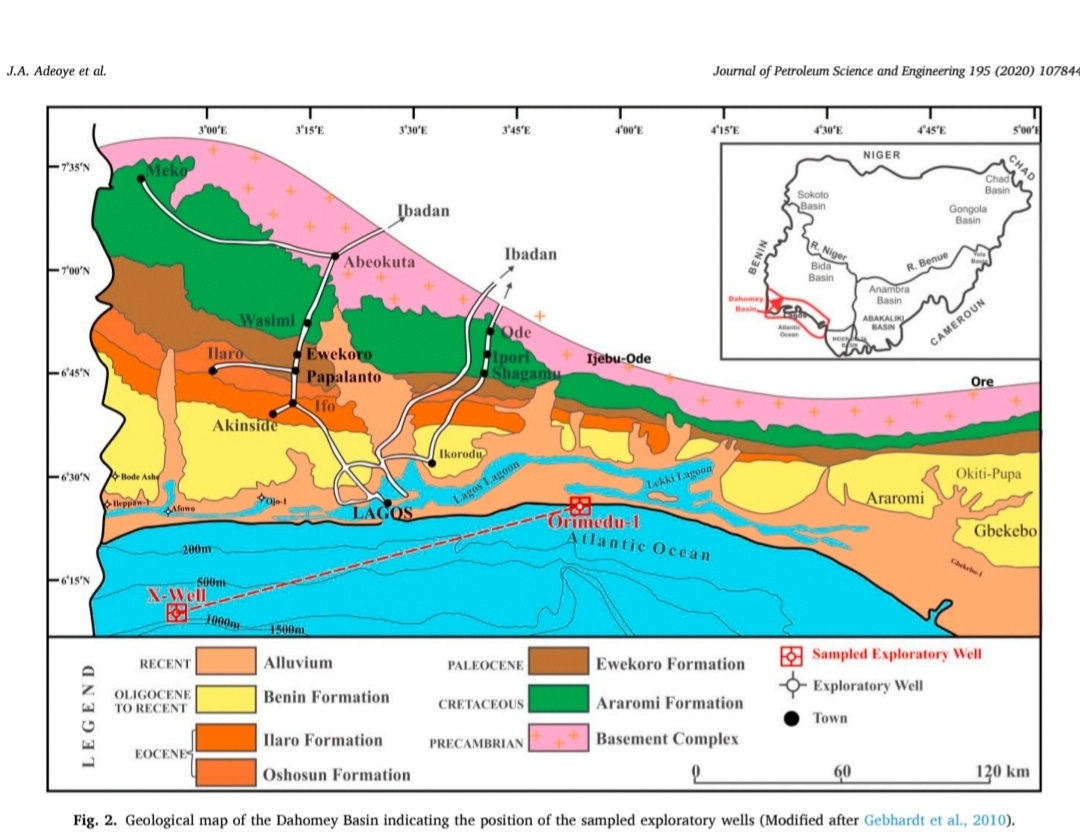
The Dahomey Oil Basin

Oil Exploration and Prospecting have begun in Ogun Waterside, Specifically on Eba Island, Oil and Gas Reserve are in commercial quantities in Ogun East, Ogun Waterside as well as Tongeji Island which is part of Dahomey Basin.
Solid Mineral States: States like Ọṣun (Gold), Òyó (gemstones), and Èkìtì have significant solid mineral deposits that are currently largely informal or untapped. This bill would incentivize these states to formalize and invest in the mining sector, creating a new, massive revenue stream.
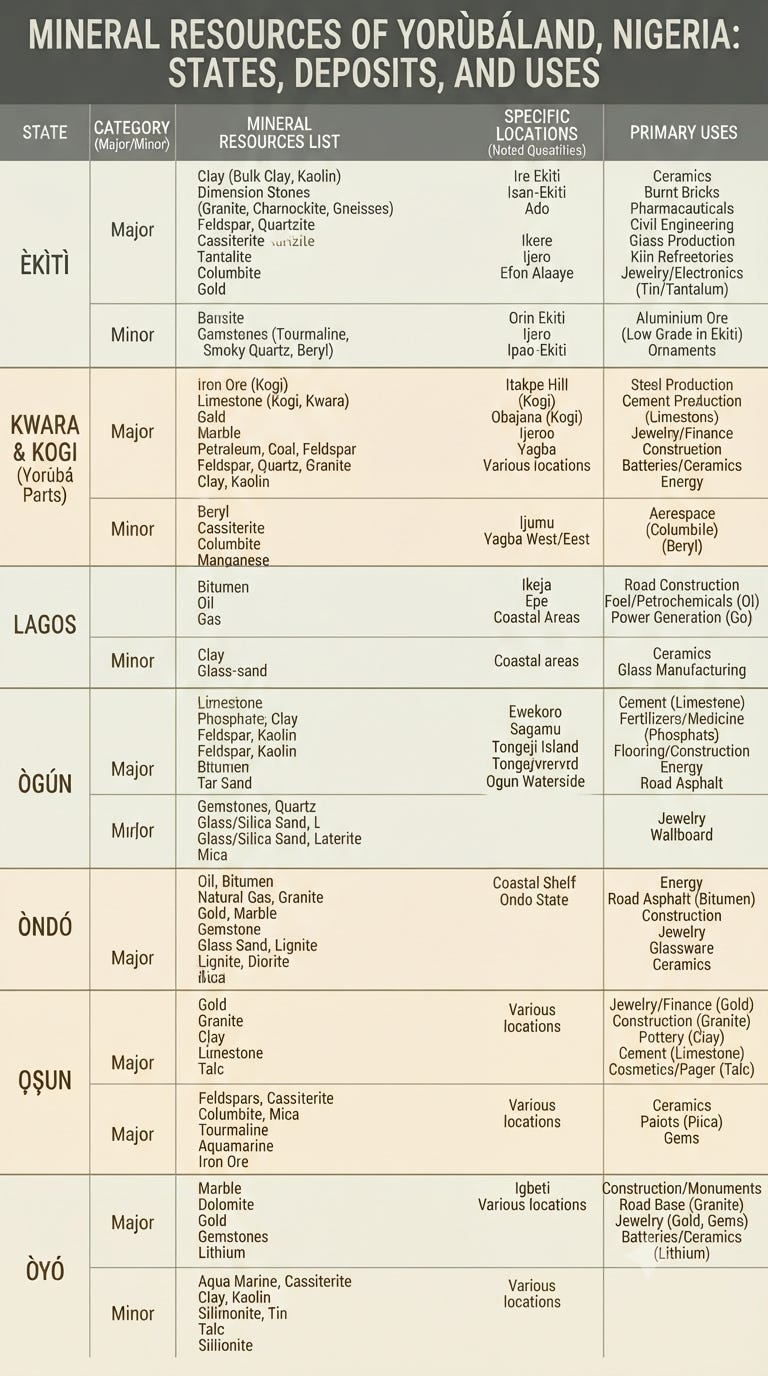
Environmental and Regulatory Challenges: With control comes responsibility. South-West states would need to develop stringent environmental protection laws and regulatory bodies to manage the ecological impact of mining and oil exploration, preventing the kind of degradation seen in the Niger Delta.
The 25% Remittance: Even though States retain 75%, the 25% remittance to the Federal Government is still a substantial amount. It ensures that the Federal Government remains well-funded to carry out its core functions (defense, foreign policy) and maintains a level of national redistribution.
The enactment of Bill No. 48 represents a transformative shift toward sub-national resource autonomy, moving mining from the Exclusive to the Concurrent Legislative List.
For the South-West geopolitical zone, this decentralization is the key to unlocking a massive, multi-billion dollar mining value chain by empowering States to act as Primary investment hubs rather than passive observers.
Unlocking Value Through Decentralization (Bill No. 48)
By granting South-West states the authority to regulate extraction, issue mining licenses, and retain a significant portion of mineral revenue (remitting 25% to the Federal Government), Bill No. 48 creates a competitive environment for state-led development.
State-Led Infrastructure: States can now leverage their mineral endowments to fund critical infrastructure—such as power, roads, and rail—which are essential to reducing the “cost of doing business” for processing facilities.
Regulatory Efficiency: State Governments can streamline the licensing process and enforce environmental standards locally, reducing the “conflict of jurisdiction” that currently hampers mining operations.
Revenue Optimization: With independent revenue collection, South-West states can reinvest proceeds directly into local geological research and mining clusters, ensuring that mining contributes meaningfully to the state’s GDP.
Strategic Partnerships: The Canadian and Australian Advantage (Using Botswana Diamond/De beers Model)
Canada and Australia are the Gold standards for modern, sustainable mining. South-West states can attract these firms by establishing a “pro-investment” framework.
Technical Expertise & ESG Compliance: Partnering with Canadian and Australian firms brings in global best practices for environmental protection and social responsibility, which are necessary to secure large-scale international project financing.
Technology Transfer: These partnerships facilitate the importation of advanced extraction and processing technologies (crushers, concentrators, and smelters), which are critical to scaling operations and increasing output value.
Investment Security: Collaborating with established international firms provides a “de-risking” signal to global markets, making it easier for South-West states to access the long-term capital required for large-scale mining infrastructure.
Building the $150B+ Value Chain: To reach the potential of a $150 billion value chain, the South-West must transition from being a source of raw mineral exports to an Industrial hub of beneficiation (processing).
Mining (Extraction): Formalizing artisanal mining clusters in states like Òyó, Ọṣun, and Èkìtì allows for higher production volumes while ensuring safety and environmental compliance.
Processing (Beneficiation): South-West states can establish industrial processing zones (similar to the lithium processing models seen in other regions) where minerals are converted into battery-grade products or industrial raw materials.
Market (End-Use): By integrating these minerals into local industrial chains—such as the regional construction, cosmetic, or ceramic industries—South-West states create a “multiplier effect” where the mineral value is captured locally before reaching international markets.
4. Fiscal Reforms and Strengthening Institutions
Proposal: Mandating Auditor General reports (Fiscal Reforms) and separating the Attorney-General from the Ministry of Justice (Strengthening Institutions).
Impact on South-West States: These proposals aim to improve governance and accountability, which are values often championed in the South-West socio-political discourse.
Improved Fiscal Discipline: Mandating the publication of Auditor General’s reports at the state level would increase transparency. While most South-West states are relatively compliant, this would create a uniform legal standard, making it harder for state governments to hide financial mismanagement. This could lead to better credit ratings for the states.
Enhanced Rule of Law: Separating the office of the Attorney-General from the Commissioner for Justice is a critical reform. Currently, the Attorney-General is often a political appointee of the governor, serving as both the chief legal advisor and the chief prosecutor. Separating them creates an independent Attorney-General’s office, less subject to the immediate political whims of the executive. This would bolster the independence of the state judiciary and ensure that prosecutions (or refusals to prosecute) are based on law rather than political considerations.
Conclusion
The collective impact of these legislative changes would be the significant decentralization of power in Nigeria, a long-standing goal for the South-West geopolitical zone.
Security: It would validate and strengthen the region’s homegrown security.
Economy: It would empower States to monetize their roads, develop their tourism assets, and control their natural resources, retaining 75% of the revenue generated.
Governance: It would enforce higher standards of fiscal transparency and legal independence.